Manali in May: No Plan, No Expectations, Just Mountains
"A spontaneous couple trip to Manali — conceived at 2 AM, planned one day at a time, and worth every unplanned minute. From Jackhill apple orchards to the snowfields above Gramphu."
2 AM. Jaipur. The Idea.
It started the way most good decisions do — irrationally, at night, and with no real plan.
The summer had been relentless. It was past 2 AM on the 5th when the word Manali came up. Not as a plan. More like an exhale. Within the hour, bus tickets were booked from Delhi and the Airbnb was sorted. And then, the question of actually getting to Delhi.
We left Jaipur at 11 AM — a four-hour drive through the afternoon. A McD stop somewhere on the highway, then a proper halt at Gurgaon Sector 31 around 3 PM. We left the car at a friend’s place and boarded the metro toward Kashmiri Gate ISBT by early evening.
The bus was scheduled for 7:30 PM on the 5th. It didn’t come.
There was some mechanical fault — nobody had clear information on when it would be fixed or if another bus was coming. We waited for two hours on the ISBT, bags between our feet. And in those two hours, the trip felt suddenly very fragile. It was conceived at 2 AM on an impulse. Nothing about it was planned more than a few hours ahead. The sensible thing, standing in a bus depot at 9 in the evening with no bus in sight, would have been to turn around.
That is the particular quality of spontaneous trips — they give you every opportunity to undo themselves. They put you in an uncomfortable situation and ask if you still mean it.
Eventually, we were moved to another bus. We got in, found seats, and the trip began.
The overnight journey unfolded the way those journeys do: highway lights, broken sleep, phone screens dimming out one by one. And then, somewhere in the early hours, the roads started doing what roads do in the hills — leaning, curving, climbing.
Arriving at 6 AM in a Half T-Shirt
We stepped out of the bus at Manali at 6 AM. The first thing that hit us was the cold. Not uncomfortable cold — clarifying cold. The kind that reminds you that your body knows the difference between air and the thing Delhi passes off as air. I was in a half t-shirt and felt it immediately.
We had packed winter clothes — somewhat on impulse, somewhat from a vague sense of it’s the mountains — and standing there in the early morning, that felt like the best decision of the trip.
The mountains were visible even then, snow-capped, framed by a still-dark sky above and a valley waking up below. A taxi took us from the bus stand up to Jackhill, on Siyal Road — our Airbnb was up there, a short distance from the road but requiring a 100-200 metre walk on foot. The Airbnb reviews had called this out. We had read it and half-dismissed it.
We shouldn’t have.
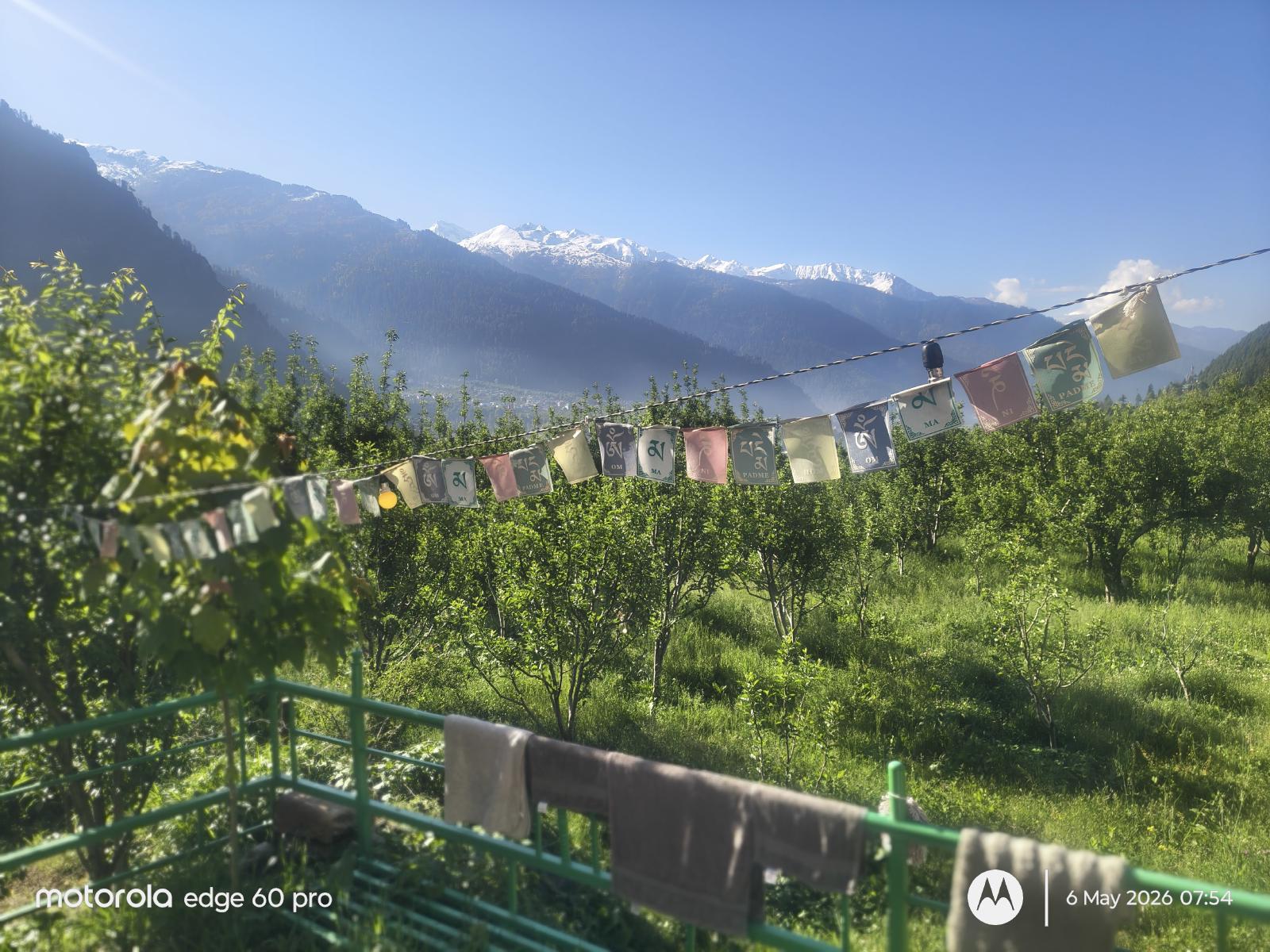
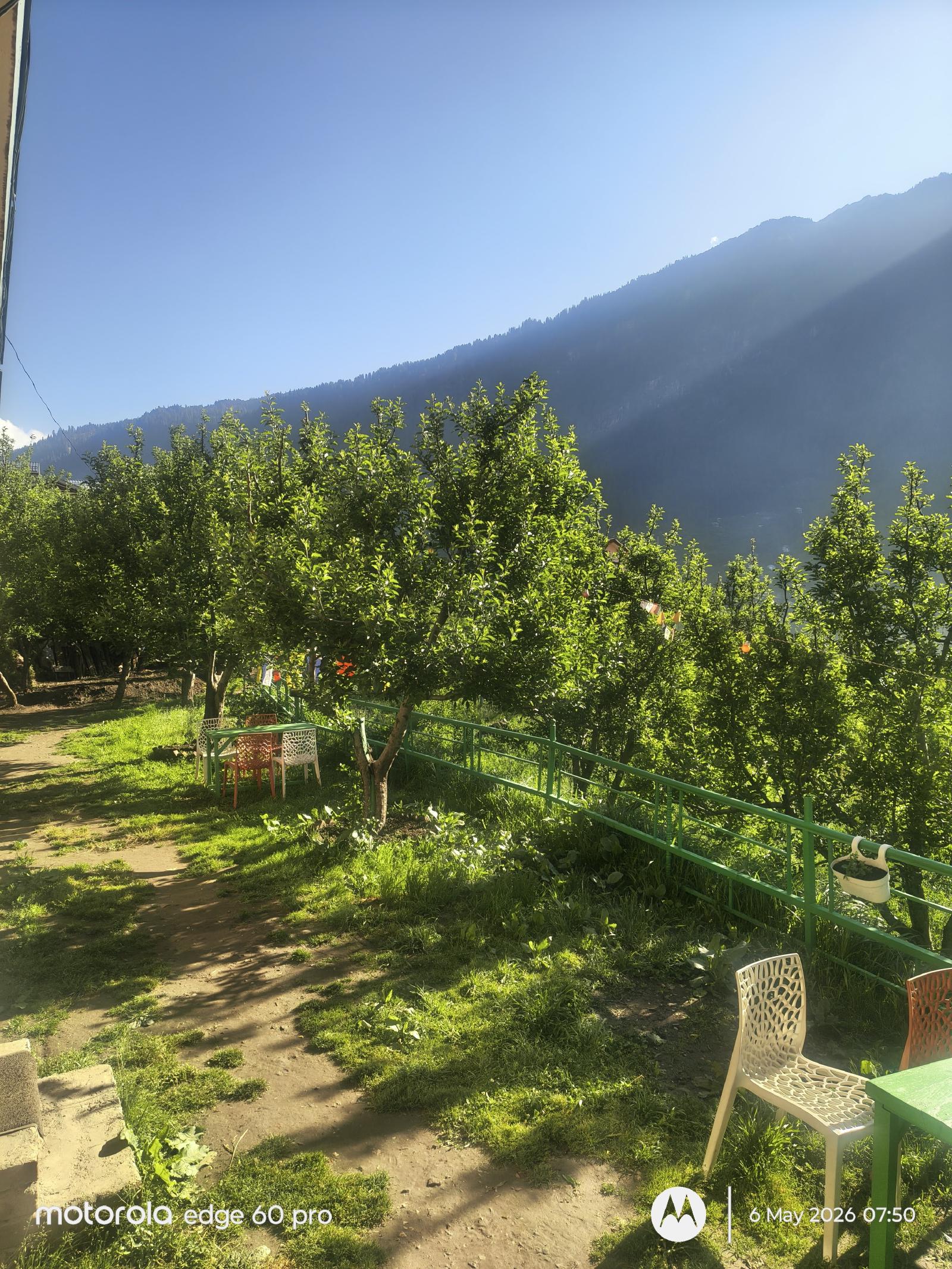
The walk in was through apple orchards — bare of fruit (wrong season), but dense with leaves, quiet, sloping gently up the hill. And then the Airbnb opened up onto a view: prayer flags strung across the balcony, the valley below, and behind it all, the snow peaks catching the first proper light of the day. It was the kind of view that makes you stand there for a few minutes doing nothing.
One thing about this trip: nothing beyond the next morning was ever planned. Every day was sorted the night before — sometimes only hours before. This was not a strategy. It was just how it happened. And it turned out to be the right way.
Into the Forest
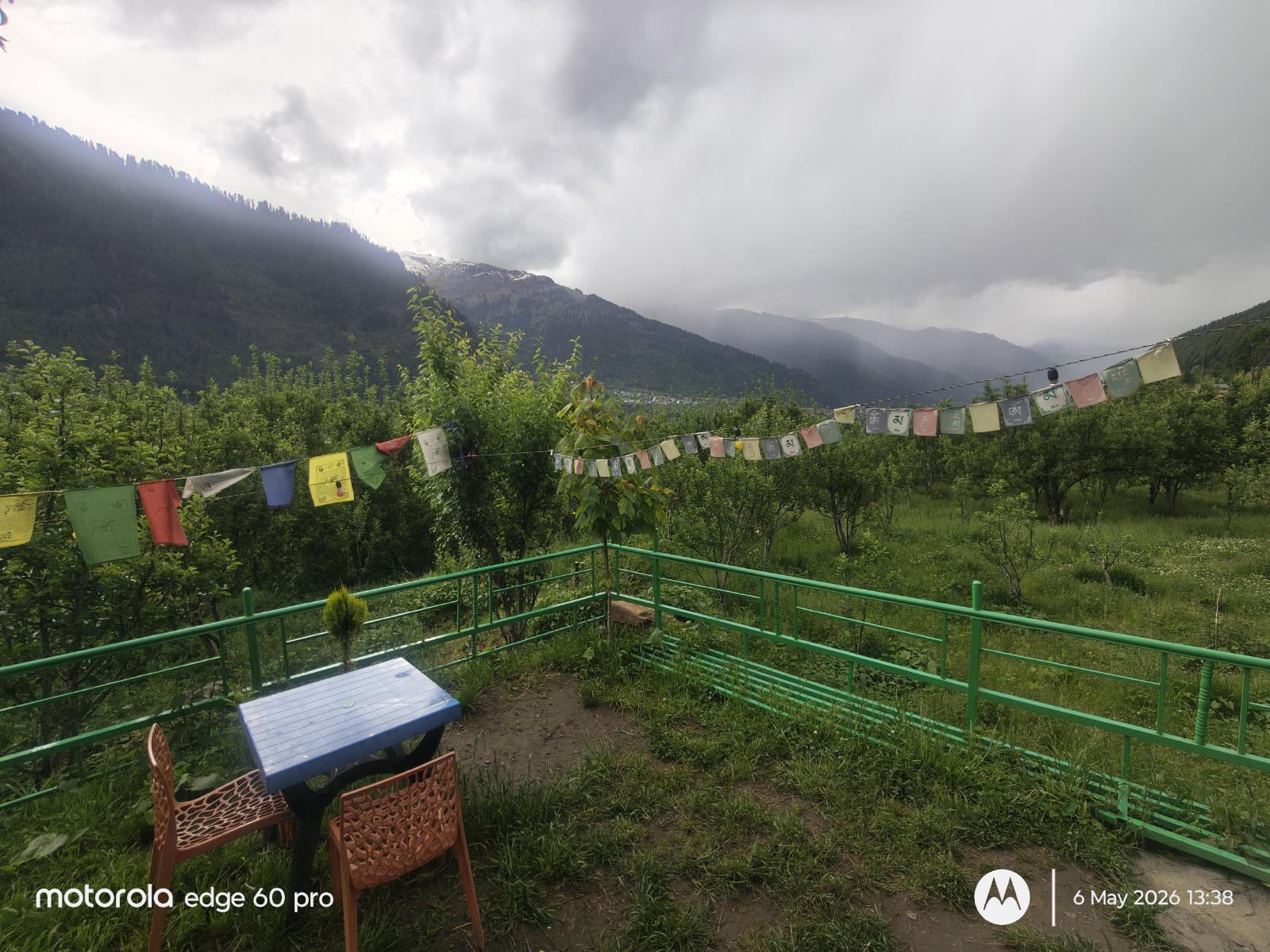
After freshening up, we walked down to Mall Road for breakfast — which is how we discovered that getting back up was a completely different affair. Manali’s geography punishes you gently: Mall Road sits in the valley, the Airbnb was on the hillside. Going down is fine. Going up, carrying food and the accumulated tiredness of an overnight bus, is the kind of climb that recalibrates your sense of distance very quickly. That was lesson one.
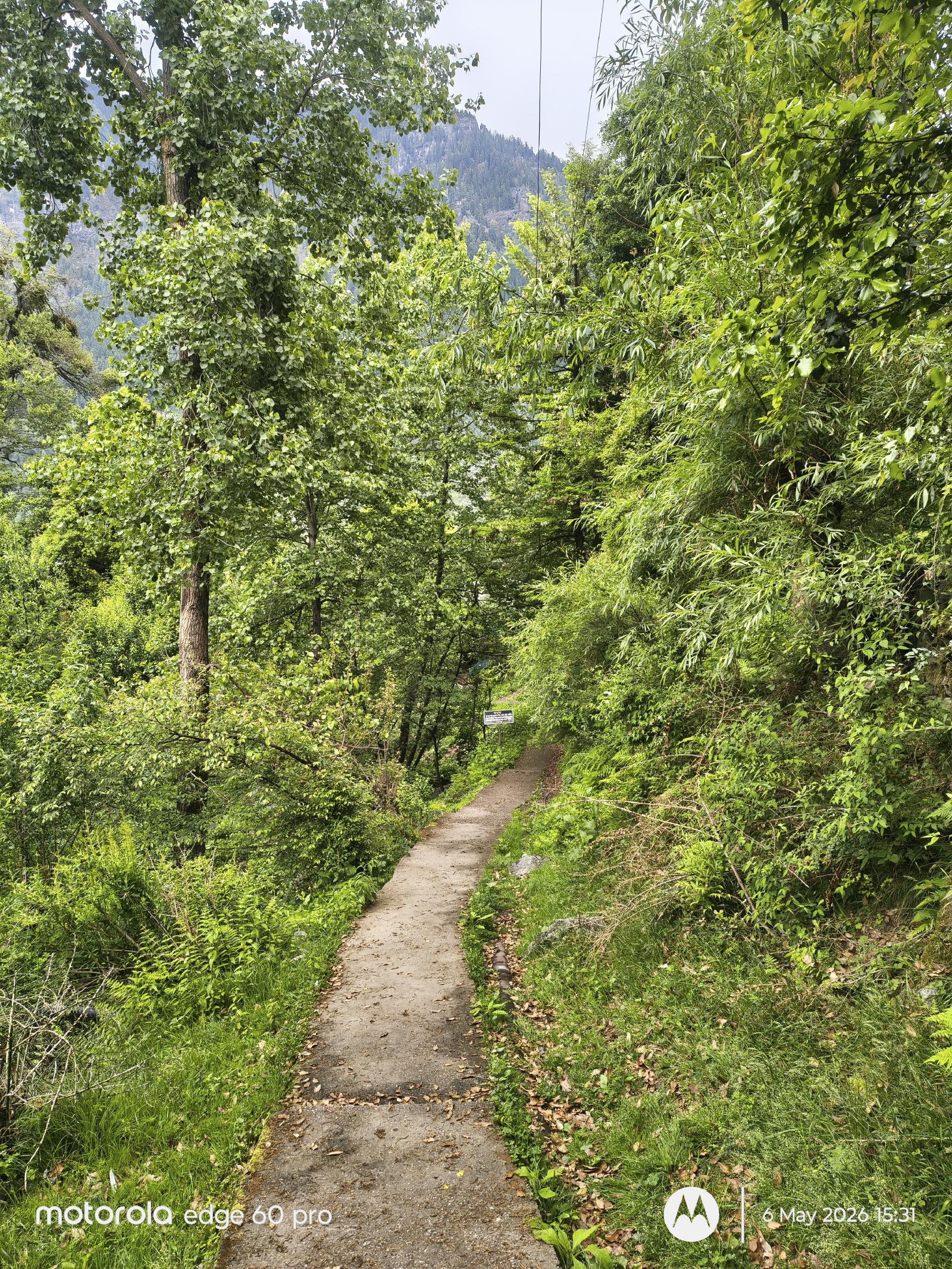
In the afternoon, without a plan or a two-wheeler, we set out on foot toward Hidimba Temple. The route took us through the Siyal Road area — through Dhungri, where DPS Manali sits quietly, its school buildings visible through the deodar trees, the kind of campus that makes you understand why people end up staying in this town longer than they intended. Small food stalls lined the way, unhurried in the way that only hillside streets can be.
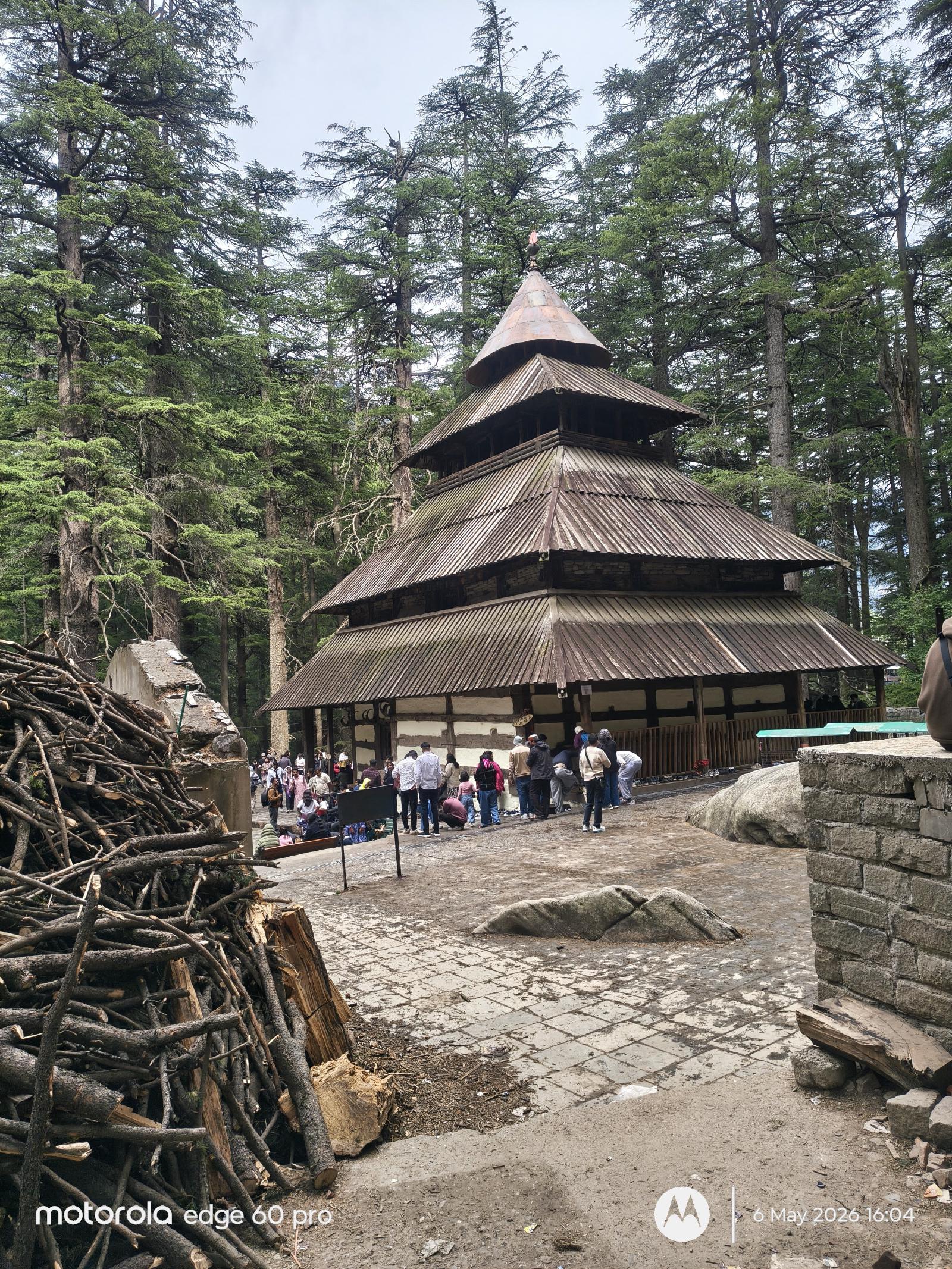
Hidimba itself appears in a clearing of deodar forest. The approach through the trees — even with a handful of tourists around — carries a stillness that the main road doesn’t have. The temple’s wooden shikhara, carved with intricate detail, stands against the tree line in a way that seems designed for exactly this backdrop. We roamed the forest around the temple, the Van Vihar sanctuary stretching nearby, and the small market just outside — stalls selling woolens, local honey, prayer beads, the kind of things that are worth stopping at even if you don’t buy anything. Some places make you slow down without asking. This was one of them.
By the time we returned and had dinner on Mall Road, the day had accumulated without us noticing. My phone had logged 14 km — about 9 of those just in the afternoon, without the climb back to the Airbnb included. Four to five hours of walking, mostly without noticing.
And on Mall Road that evening: a Himachal Tourism office that neither of us had noticed before. We stopped, looked, and booked the government Shinkula Pass tour for the penultimate day of the trip — on the spot, that night. One more thing decided not by a plan but by what the day had left lying in the path.
That walk back up at night was the moment. Locals do this routinely — the climb, the descent, the climb again. It looks ordinary. It is not. There is something quietly humbling about watching someone navigate a steep hill path in the dark without a second thought, while you’re breathing hard and calculating distance. Health is wealth. And without the Suzuki Access we rented that evening — a casual decision made at a rental shop on the way back — the rest of the trip would have been a very different, and much slower, thing. That one decision would quietly shape every day that followed.
Sulphur, Stone, and the Long Road to Naggar
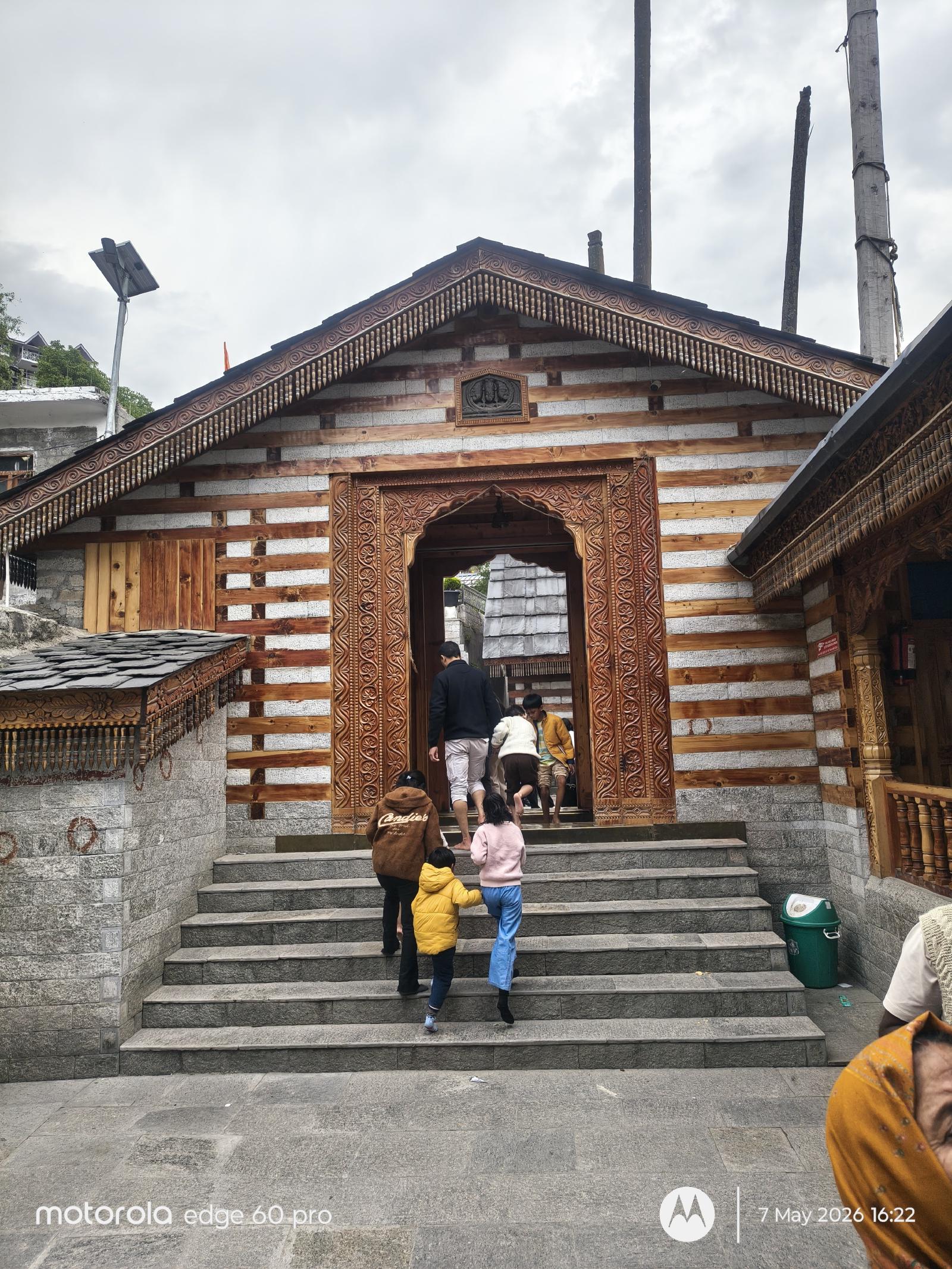
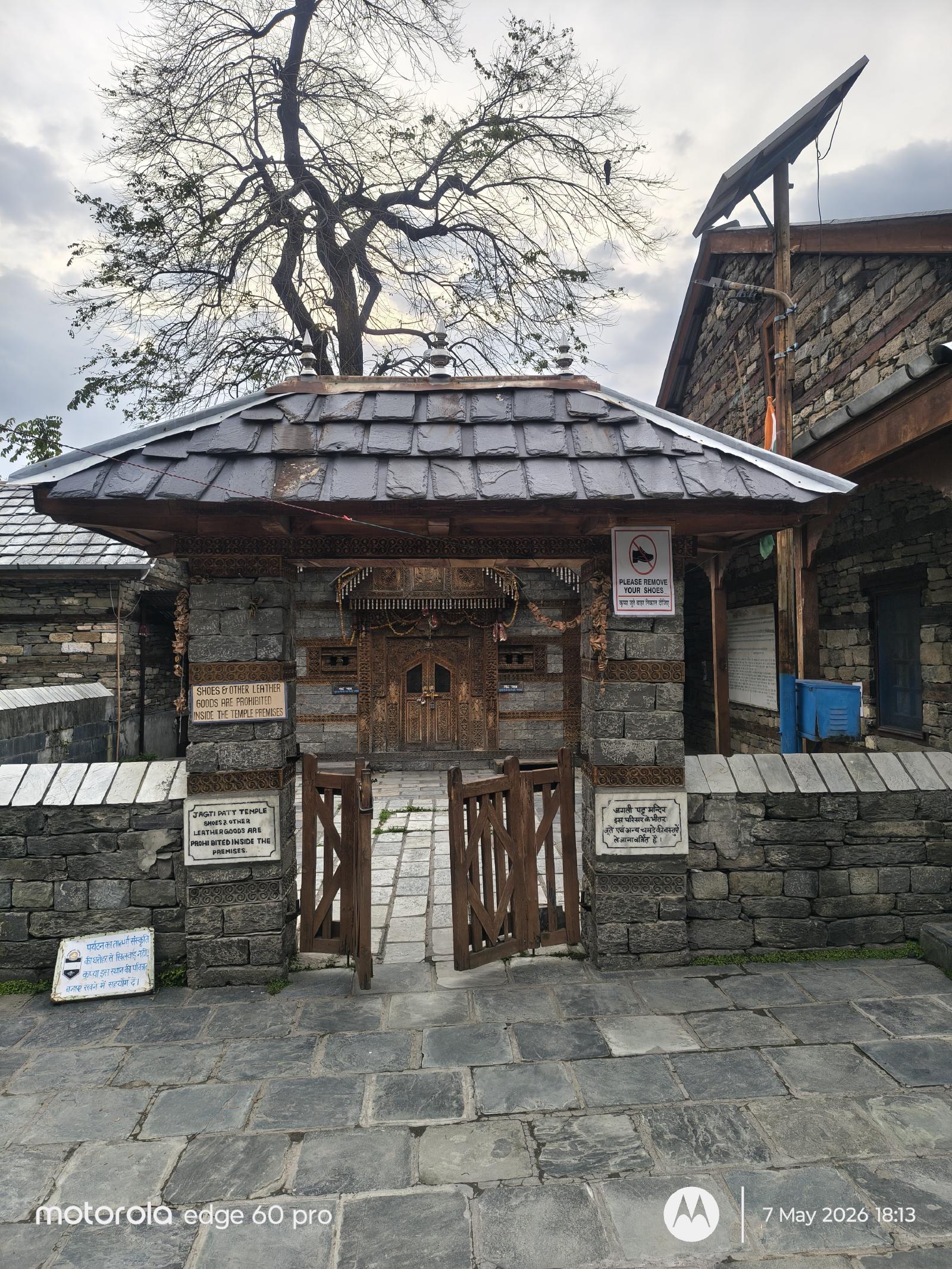
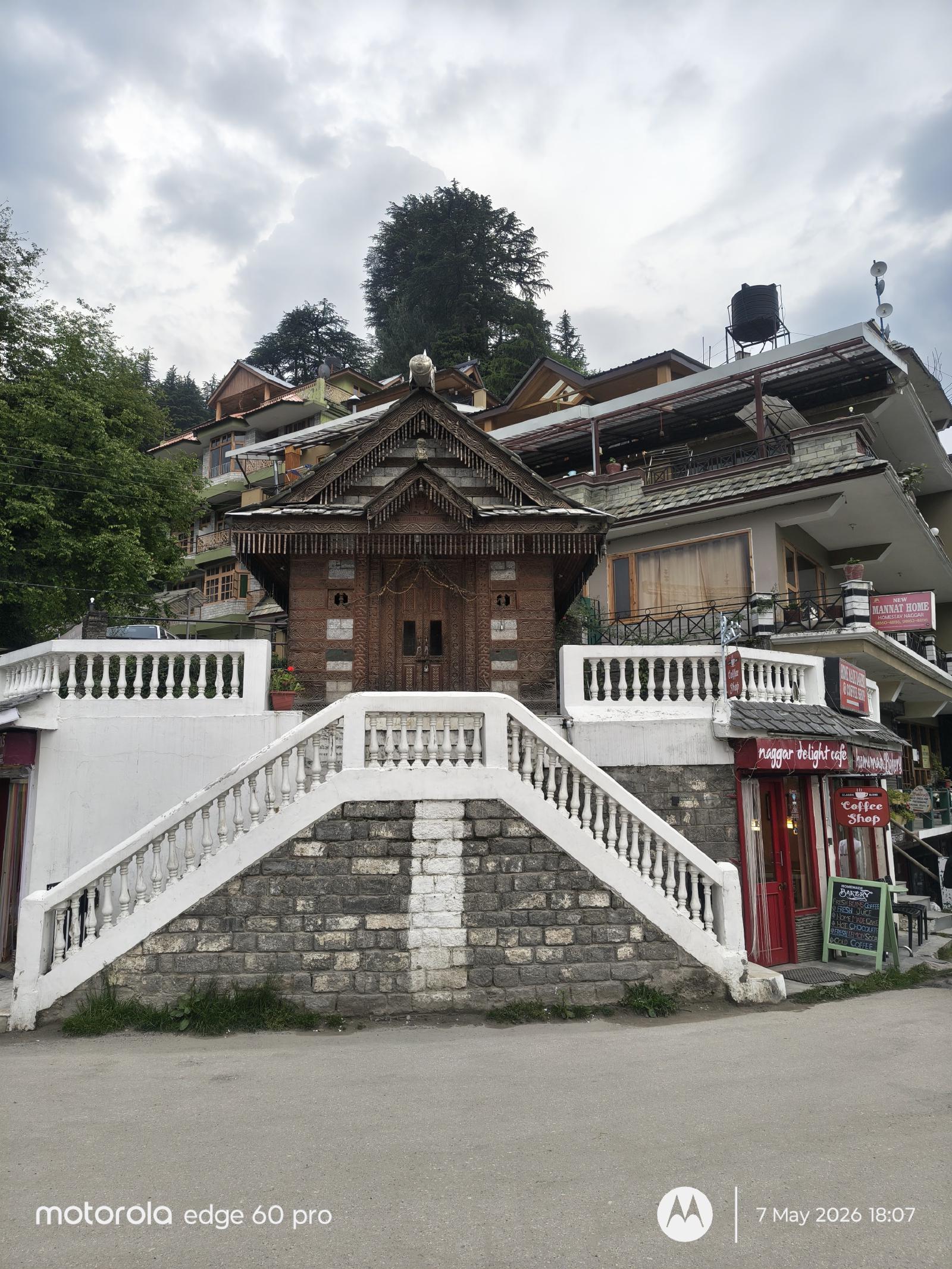
Morning was calm — breakfast on Mall Road, some work from the Airbnb through the middle of the day. By early afternoon, we were on the Access.
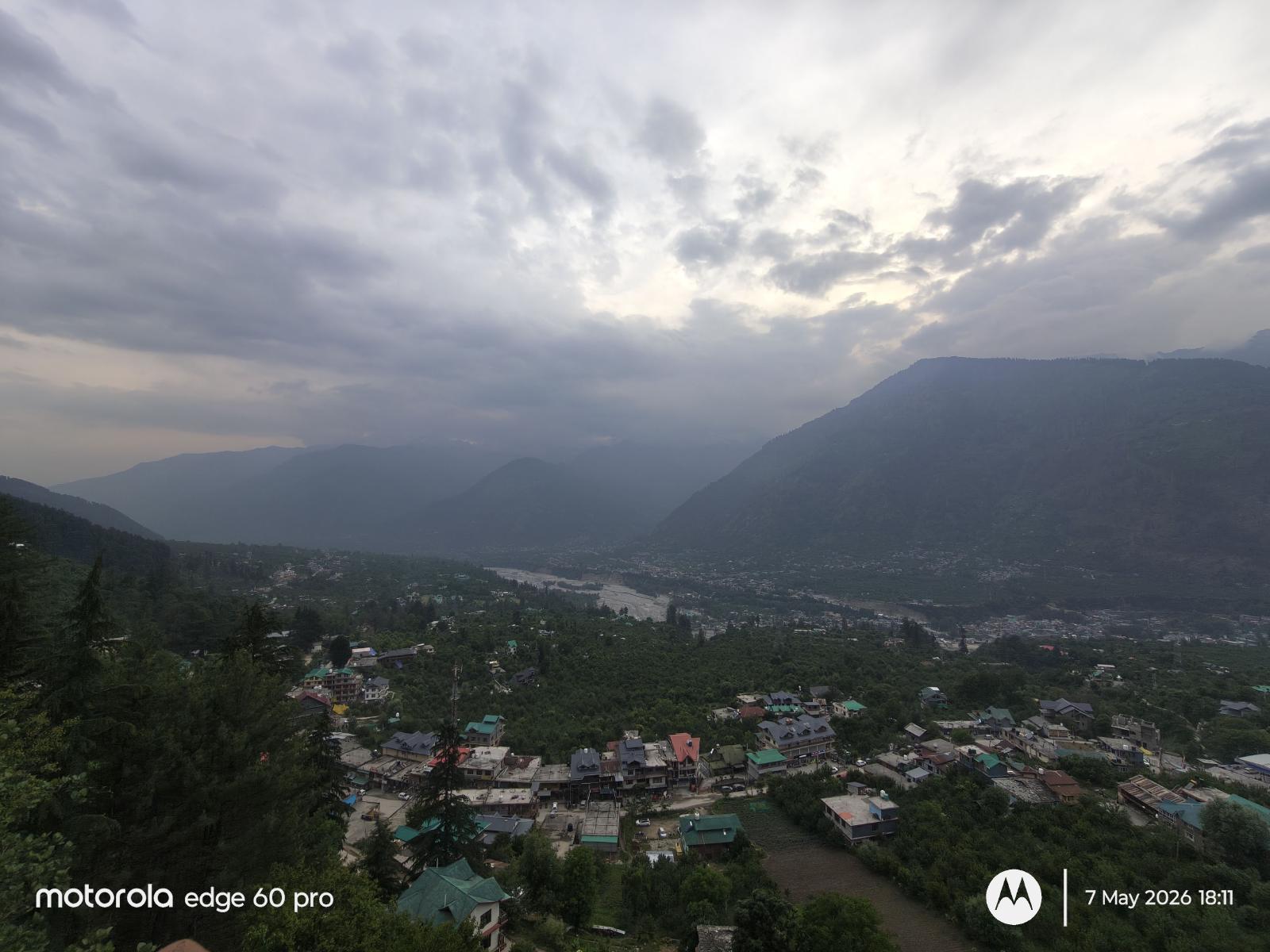
The ride to Vashisht takes about fifteen minutes from Mall Road, but even that short stretch — rising gently above the town with the Beas below and the valley opening up — is enough to remind you why two wheels in the mountains work differently than four. You feel the air change. You’re not inside something watching scenery through glass. You’re in it.
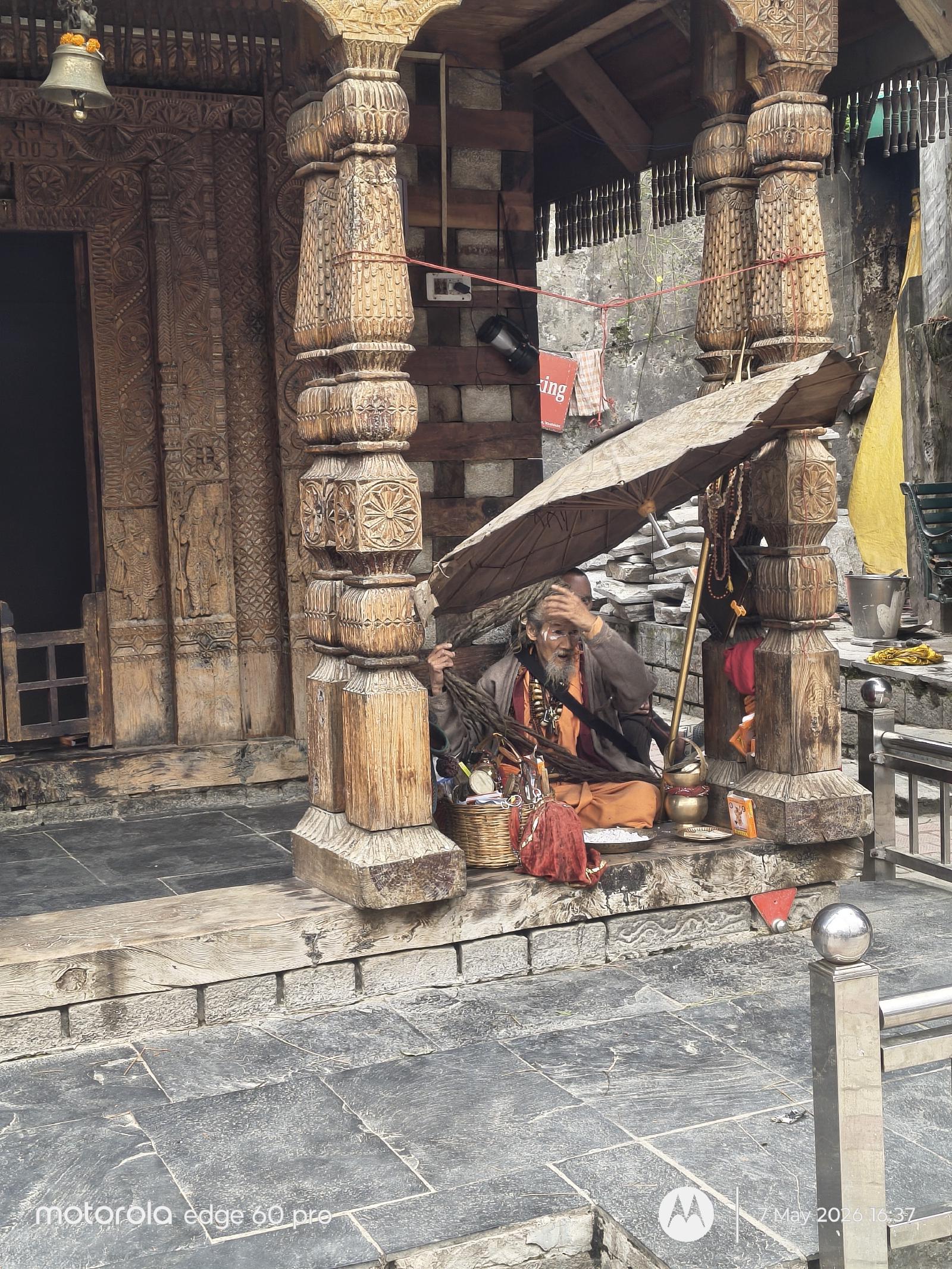
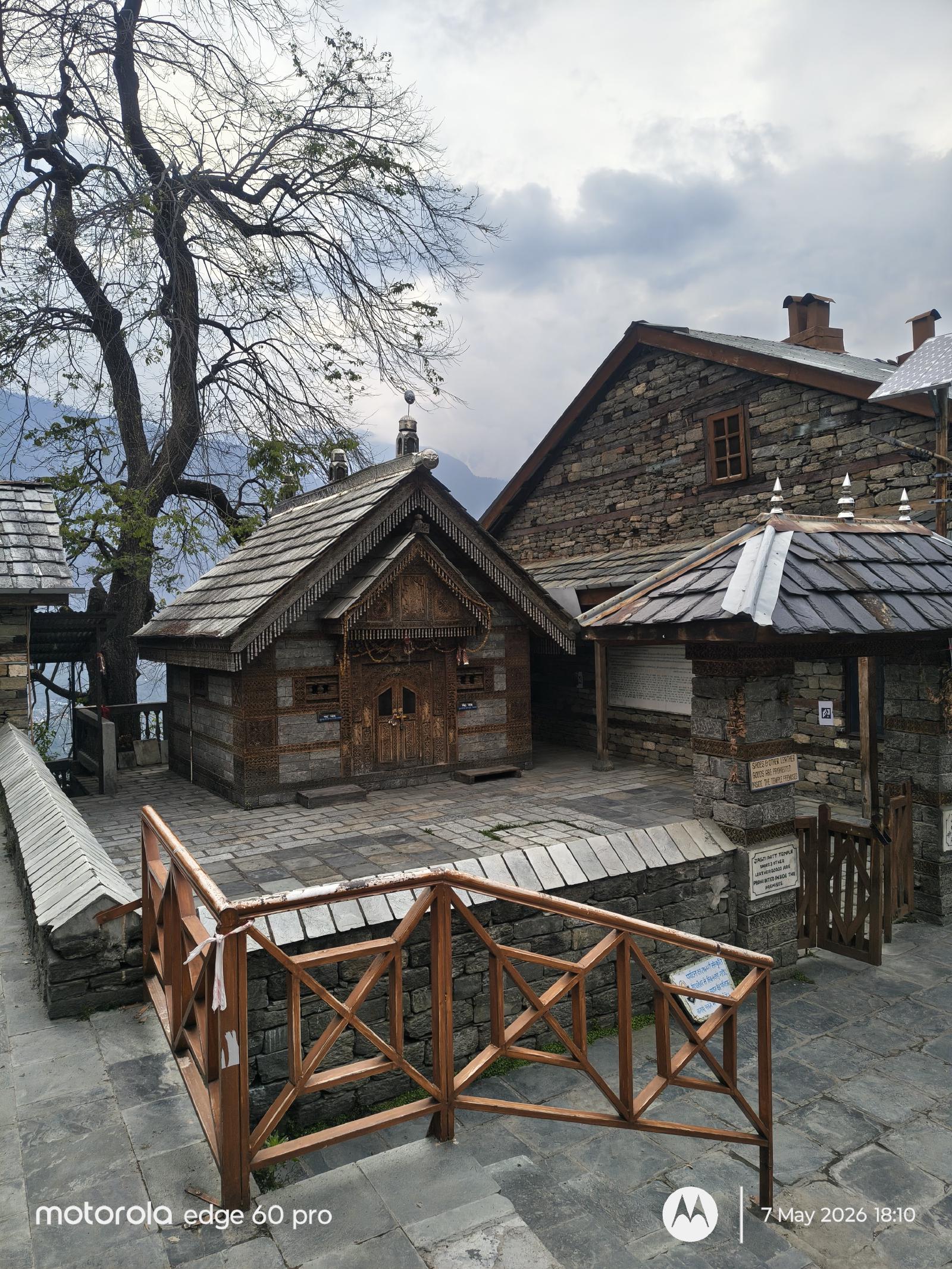
The temple and its hot spring sit in a small cluster of lanes, dense with incense and the particular atmosphere of a place that has been active for centuries. The sky had turned overcast by the time we arrived. We didn’t step into the spring — but the place had something. A sadhu sat near the entrance in complete stillness, surrounded by marigolds and incense, under a worn umbrella, as if he had been there since the temple was built. The combination of that figure, the sulphur-warm air, stone walls blackened by years of mineral water, and the heavy overcast sky gave Vashisht a quality that was genuinely hard to name. Mystical feels like a stretch and the only word that fits.
Then the Access, and the longer ride down to Naggar.
This is the thing about riding a two-wheeler on a mountain road: the journey stops being background. The Kullu valley stretched below us the whole way — the Beas tracing its line through the valley floor, the hills layered on both sides, the sky pressing down with cloud. You feel the altitude in your hands and in the cold on your face. The road bends without much warning, and somewhere in that rhythm the destination becomes secondary. It was that kind of ride.
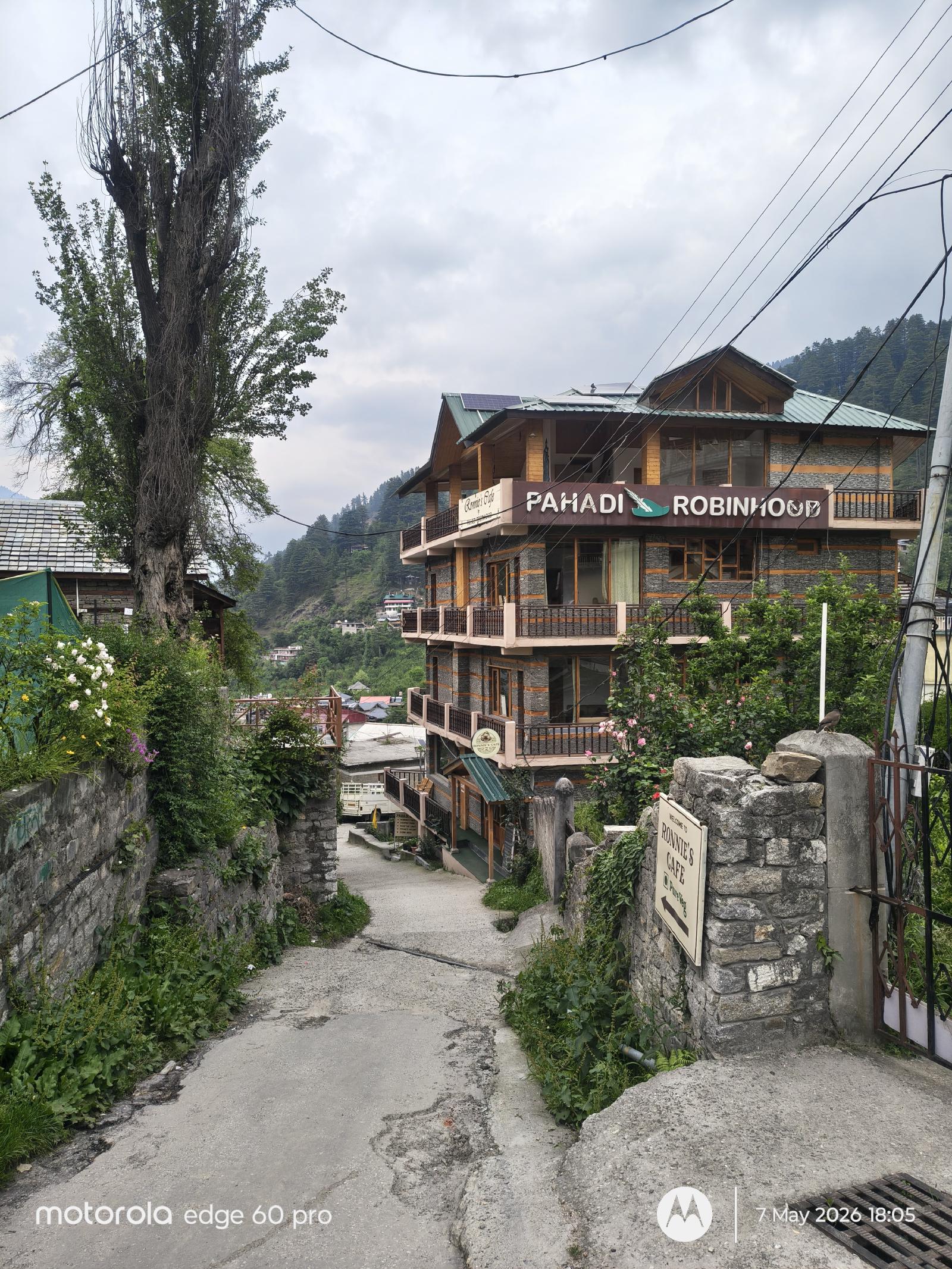
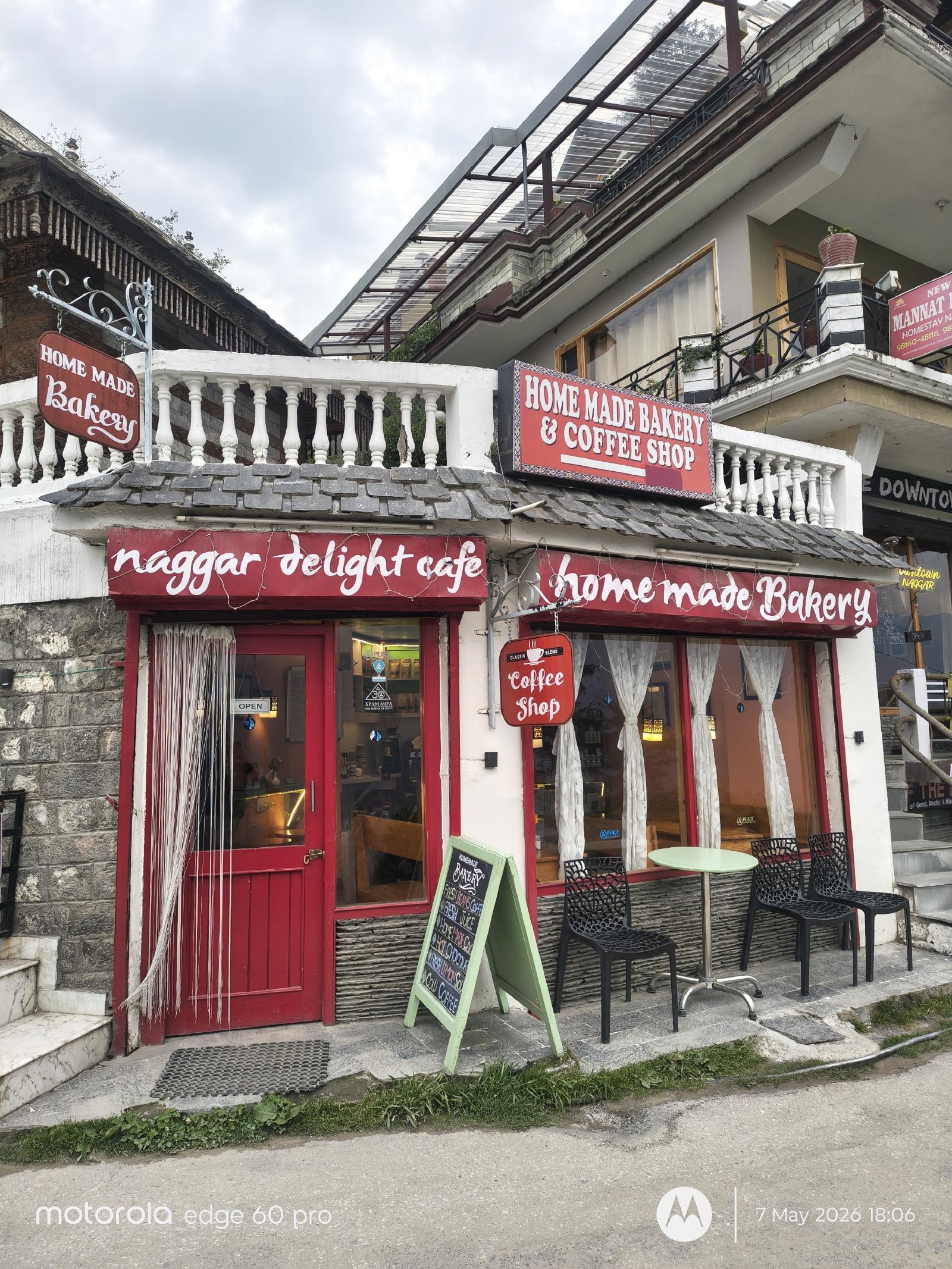
Naggar itself — honestly, we knew very little about it before going. We went for the castle. The castle was closed for renovation, wrapped in scaffolding. But Naggar — the village itself — turned out to be something we hadn’t expected. Quieter than Manali, more foreign faces than we’d seen anywhere else — long-stay travellers, people who had found the place and stayed. The lanes were narrow and unhurried. There was an atmosphere to it, some pull that we couldn’t quite explain, the kind of place you file away for a longer visit later.
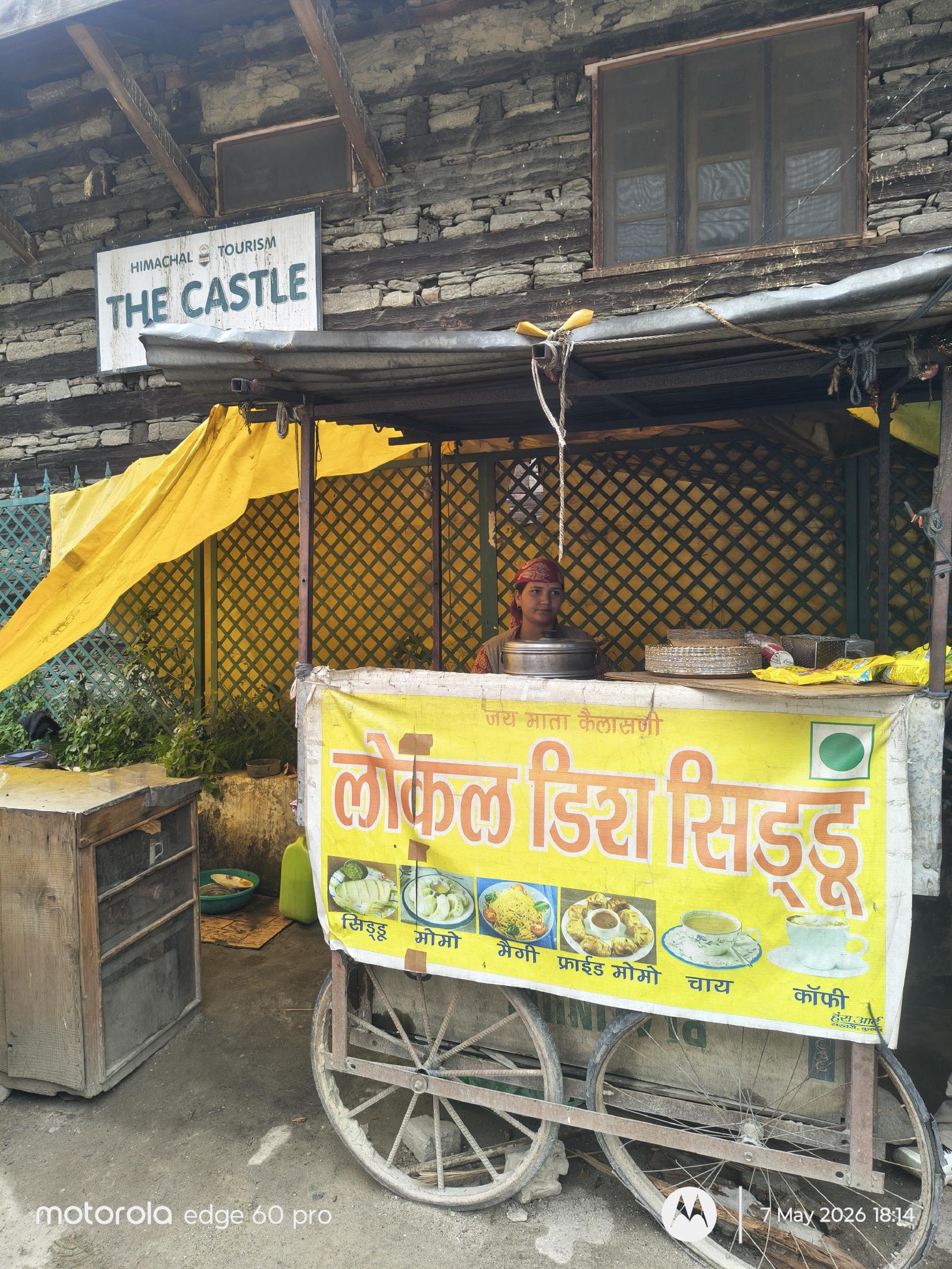
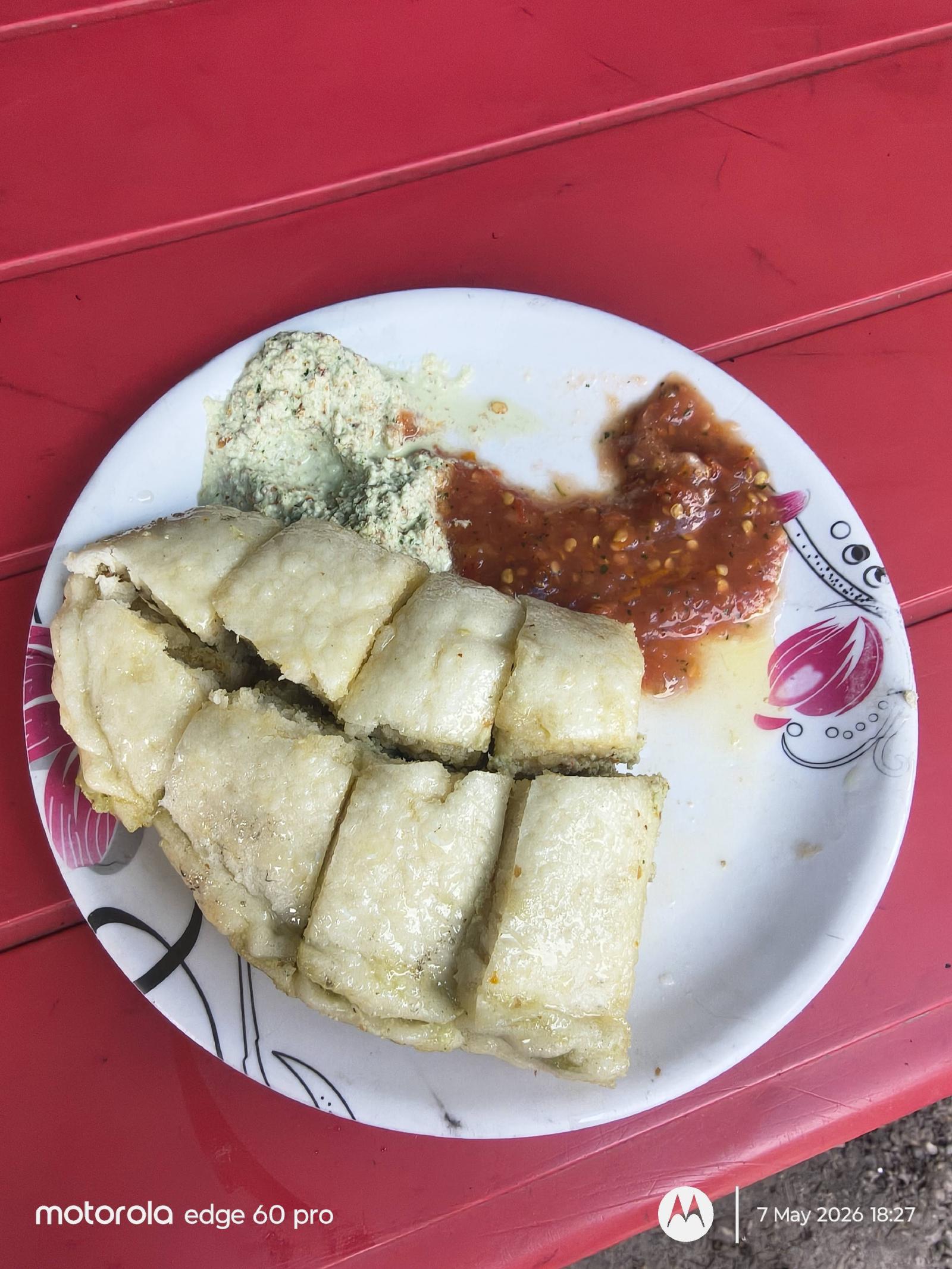
Outside the castle gate, a local food stall was doing siddhu — a Himachali steamed bread stuffed with walnut and poppy seed paste, eaten with ghee and dal. We had it there on the roadside. It was excellent in the uncomplicated way that good simple food is excellent. Add a bowl of Maggi from the same stall and a late afternoon with no particular schedule, and that is a very good afternoon.
Back on Mall Road that evening: Amigos, the German bakery on the main stretch. The croissant was genuinely good. Exactly the kind of stop a long day on the road earns.
Somewhere in the ride back, the tiredness and the valley and Naggar all settled into one feeling — the particular satisfaction of a day that went nowhere you expected and somewhere better.
The Other Side of the Tunnel
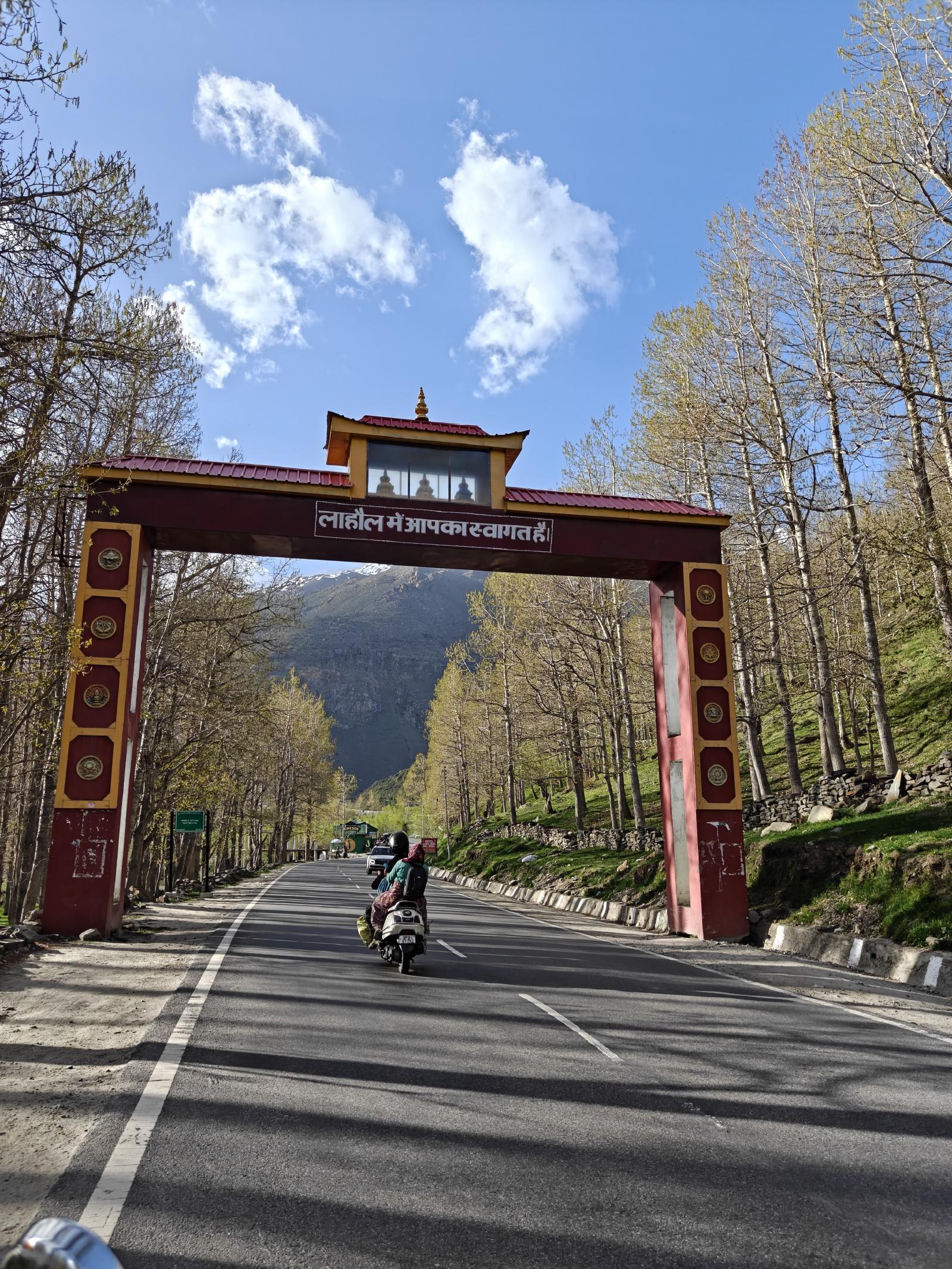
Checkout day from the Airbnb. We knew it was a mistake even as we were making it — we had enquired about extending the stay, but the place was already booked for a local wedding. That was that. We moved bags to Hotel Himgiri near Mall Road, and somewhere in that shift — from a hillside Airbnb with a balcony full of prayer flags to a regular room near the main road — something of the trip’s first texture quietly changed. The right response was to get on the Access and go somewhere.
So we did. Mid-morning, heading toward the Atal Tunnel.
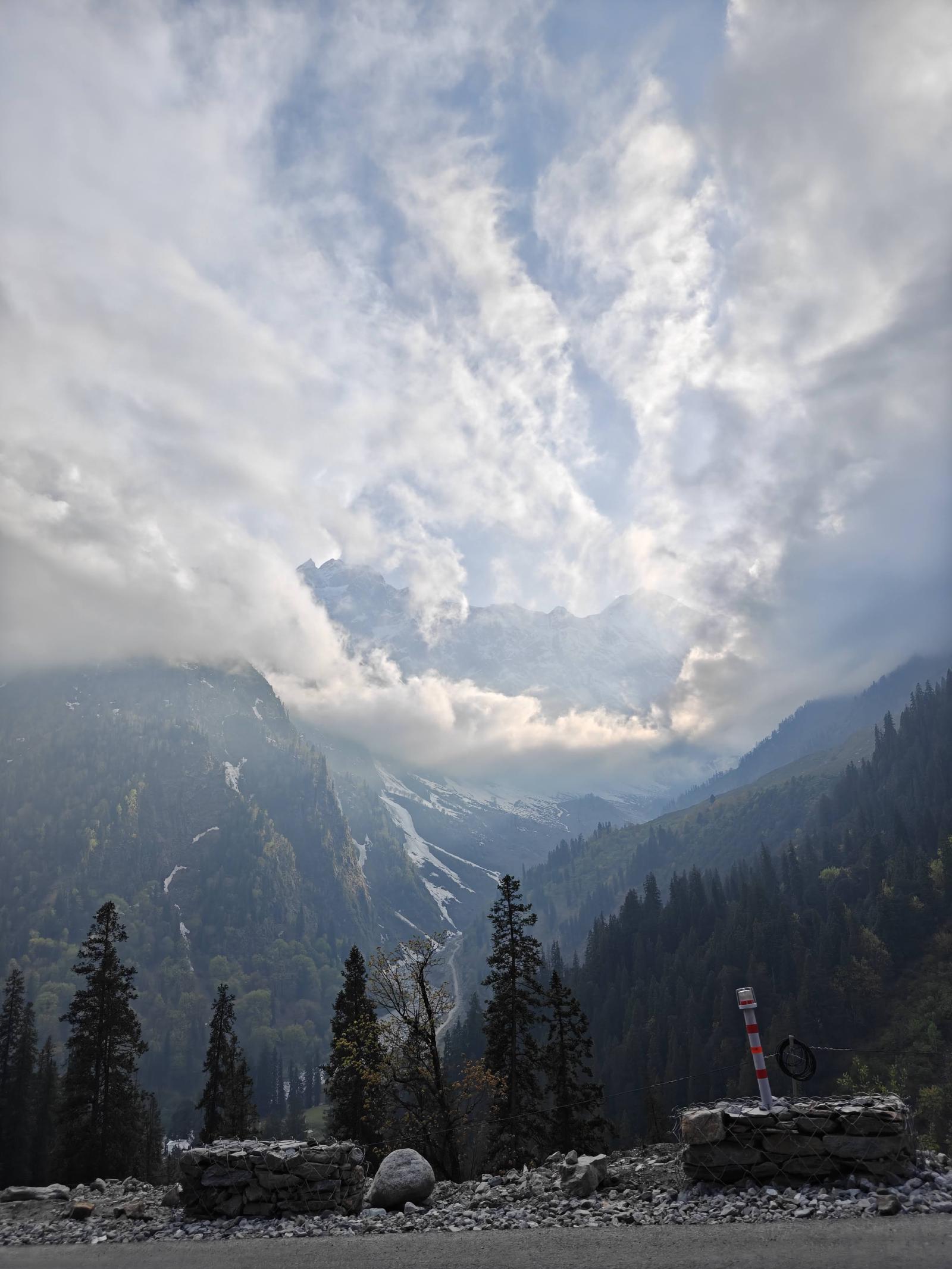
The road up from Manali climbs steadily above the tree line — the town receding below, the air thinning slightly, the green thinning with it. On two wheels, you feel every metre of that climb. The engine works a little harder, the wind gets colder, the views keep getting wider. There is a checkpoint before the tunnel entrance, and then you go in.
Nine kilometres of tunnel — the longest highway tunnel above 10,000 feet — lit with flat fluorescent light, ventilated but with its own sealed quality of air. It takes around 10 minutes to cross. And then you come out the other side.
The shift is immediate. The Manali side is forested and green; the Lahaul side — Koksar — is something else entirely. Bare rock and sparse scrub, brown and ochre and grey. The river still runs through the valley, cold and fast, but the hills around it look stripped of everything soft. Dry mountains, no greenery, the sky wide and sharp above them. It doesn’t look like the same season. It barely looks like the same country.
There is a beauty to this that takes a minute to accept — because you arrive looking for the green and instead find a landscape that seems indifferent to being looked at. But it grows on you. There’s honesty to it.
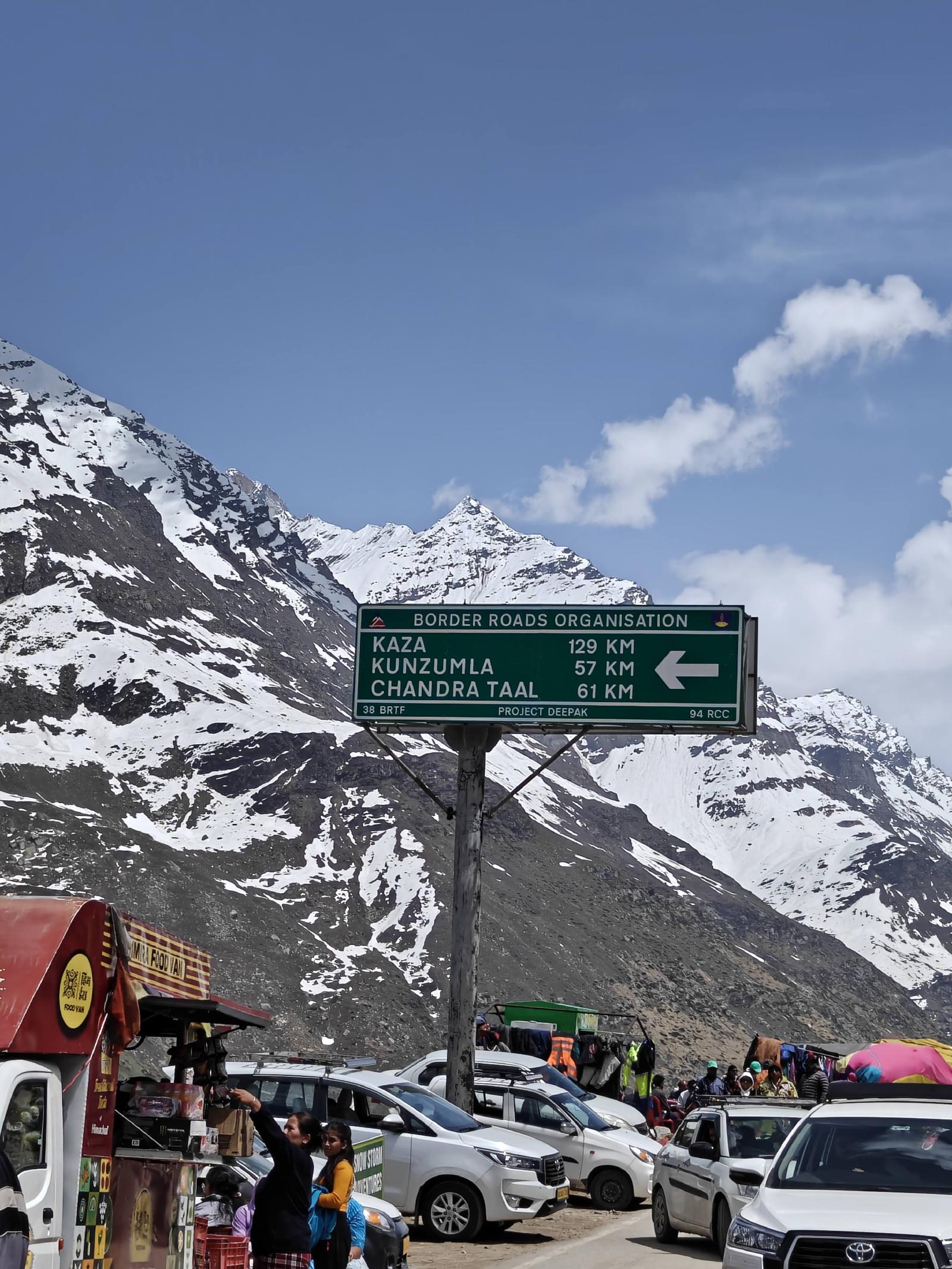
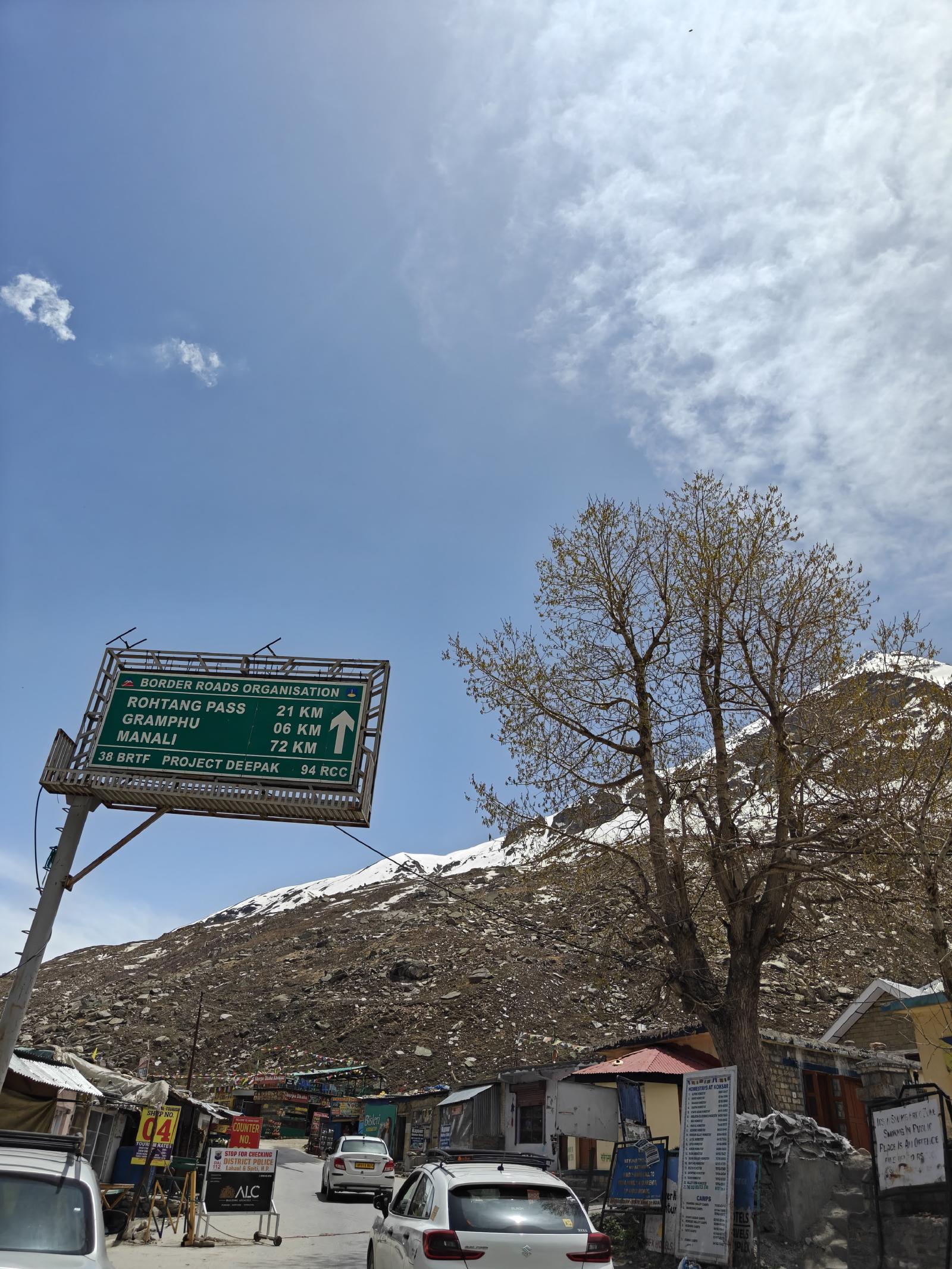
We rode through Koksar and continued to Gramphu, where the road forks: left toward Sissu and Keylong, eventually Leh. Right toward Spiti, Kaza, Chandrataal. We took the right fork, and the road climbed.
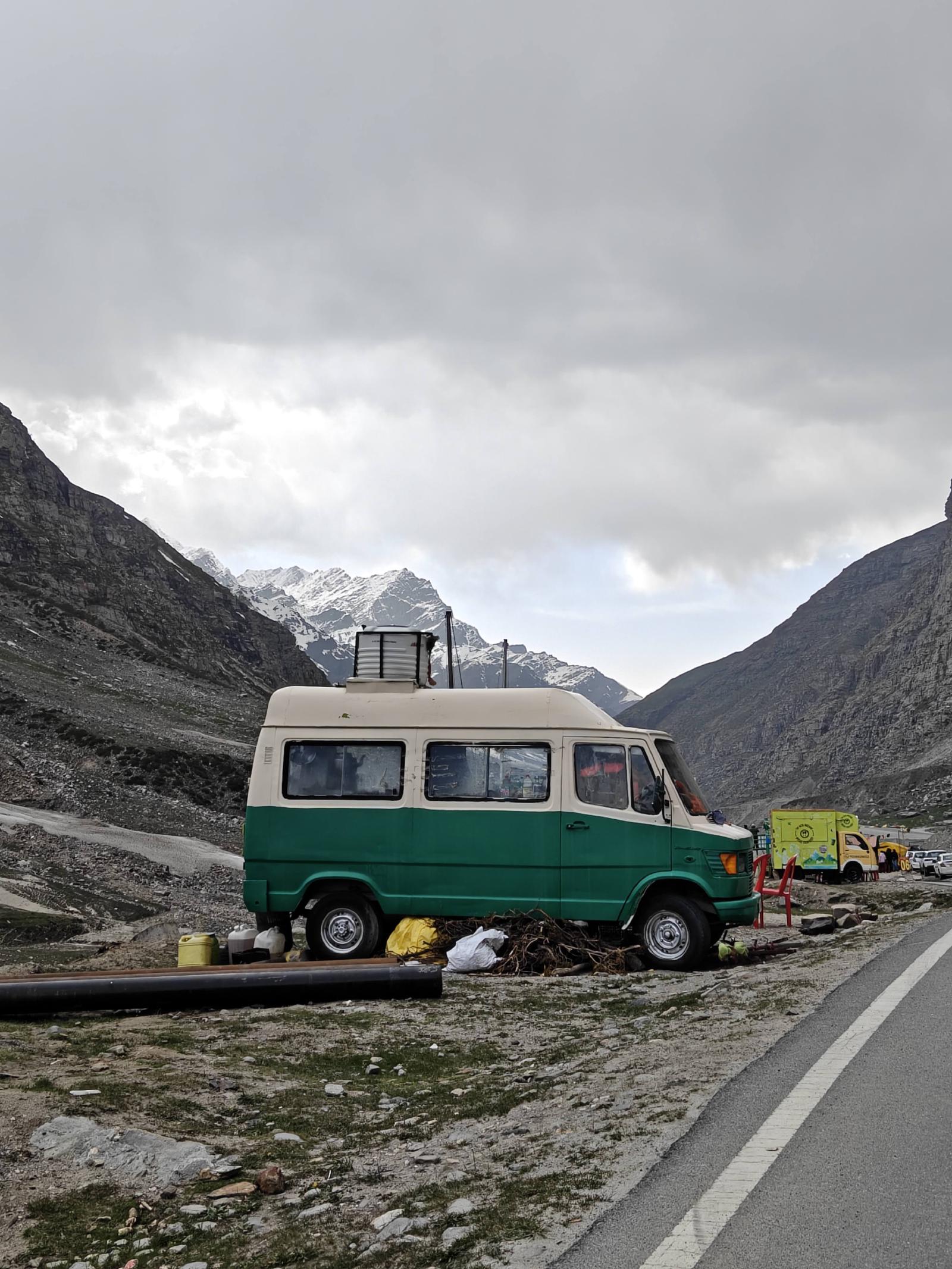
Gramphu was crowded — but only with cars, stuck in long queues. Rohtang Pass had been closed and many tourists had come here instead, to reach whatever snow they could. On two wheels, we moved past all of it.
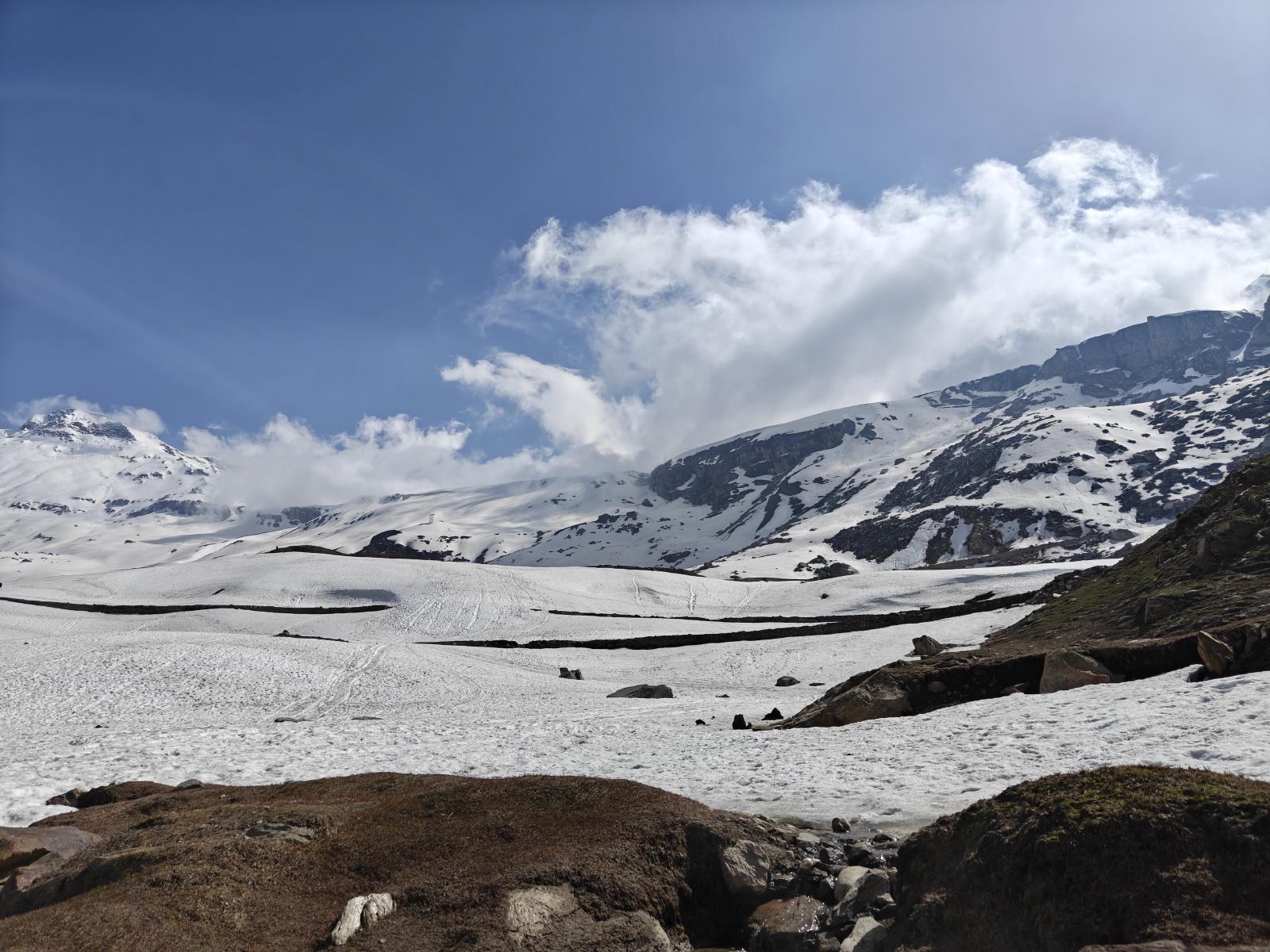
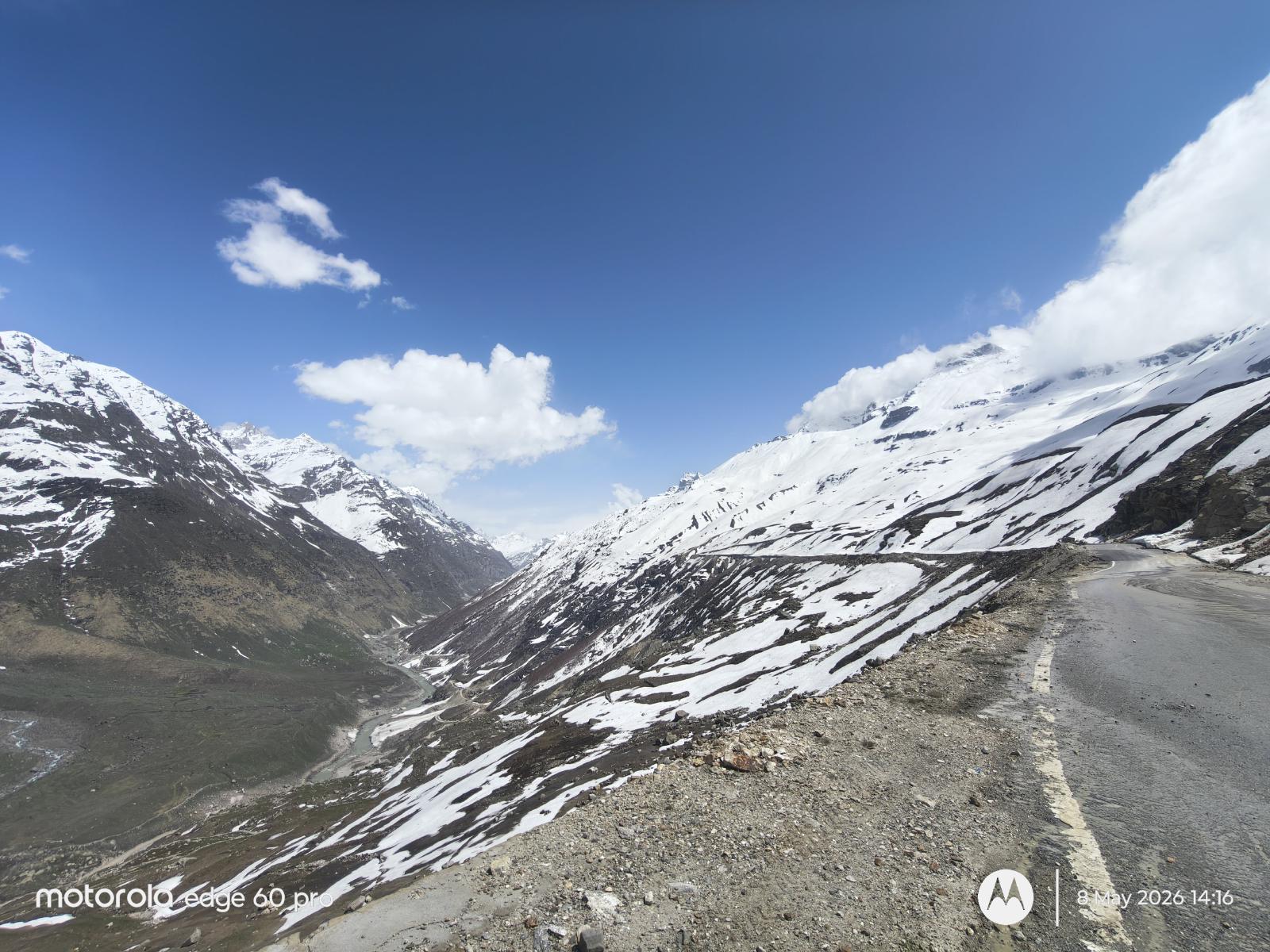
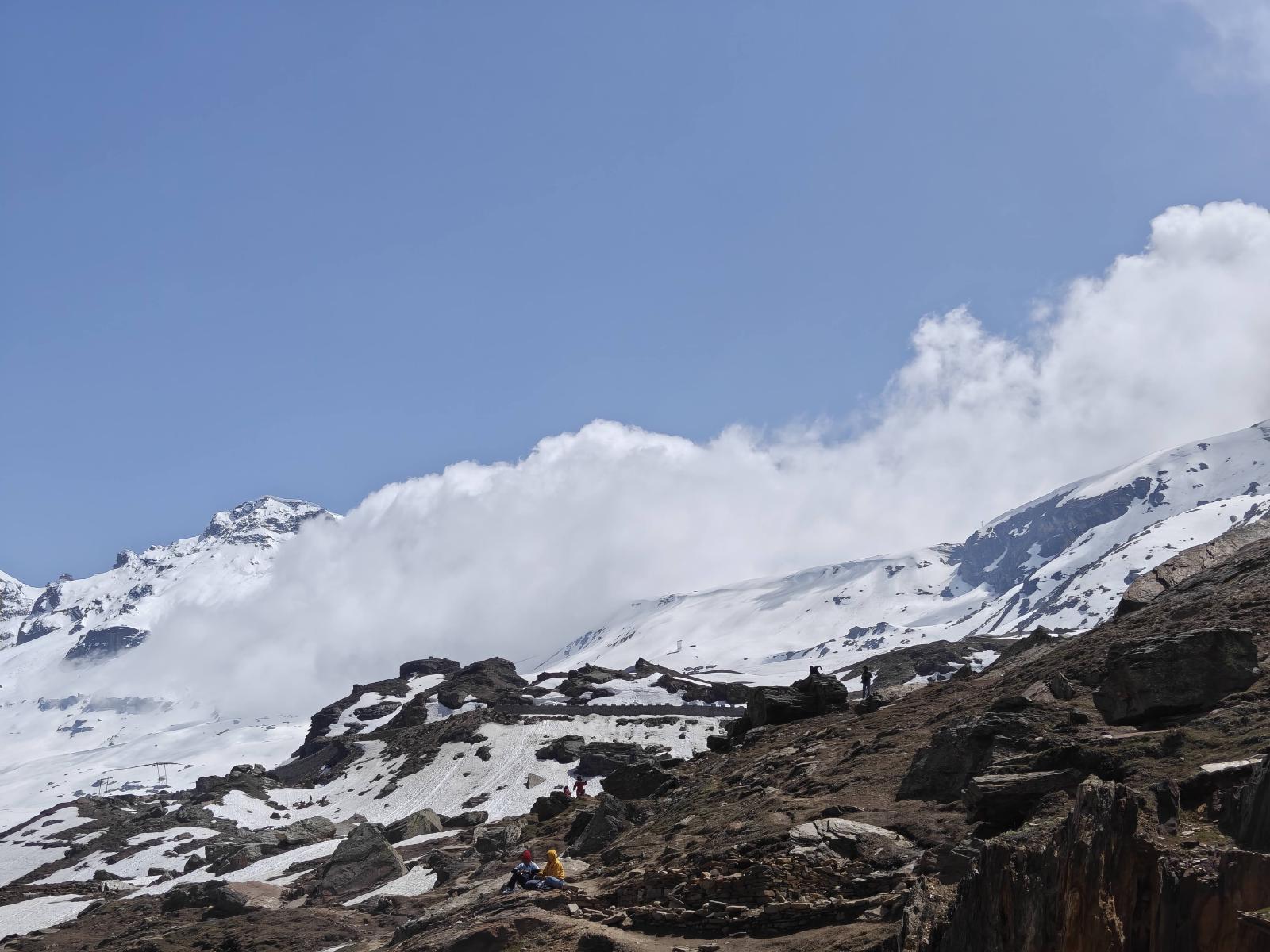
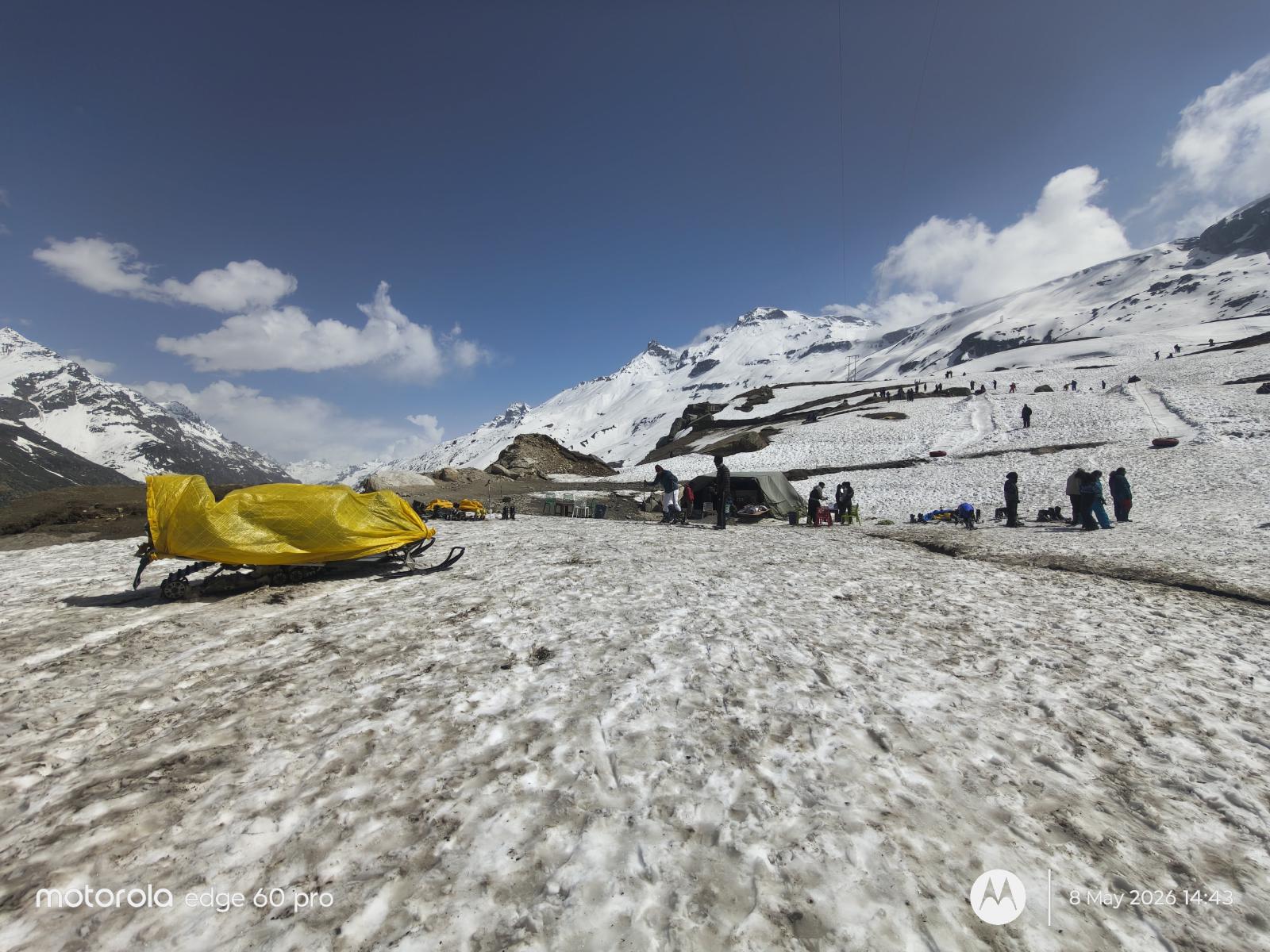
Up above the car crowd, there were snowfields. We parked, went up on an ATV bike to the higher snowpoint, and at some point stepped off and just sat.
There is a particular quality to 15-20 minutes at that altitude on a windy May afternoon. The clouds were moving fast — not threatening, just in motion, passing over the white. The wind was heavy and cold, constant. The snowfields stretched wide and then merged, at some point, into the base of the peaks above. And above those peaks: blue. That was it. Blue and white. No transition, no gradient — just those two colours doing everything.
The mountains here don’t have the lush drama of Manali. They are bare and enormous and completely without ornamentation. And somehow they feel more present because of it — like they are communicating something, or at least doing something, while you sit there receiving it. The scale of it makes the usual thoughts go quiet. You stop trying to think about it and just sit in it.
After three or four hours at Gramphu, we rode back down through Koksar and stopped at a local dhaba for lunch. Egg curry. Kadi rice. We were properly hungry by then. It was the best meal of the trip — not because of anything the dhaba was doing beyond the ordinary, but because hunger and cold air and a long morning in the mountains had done all the preparation.
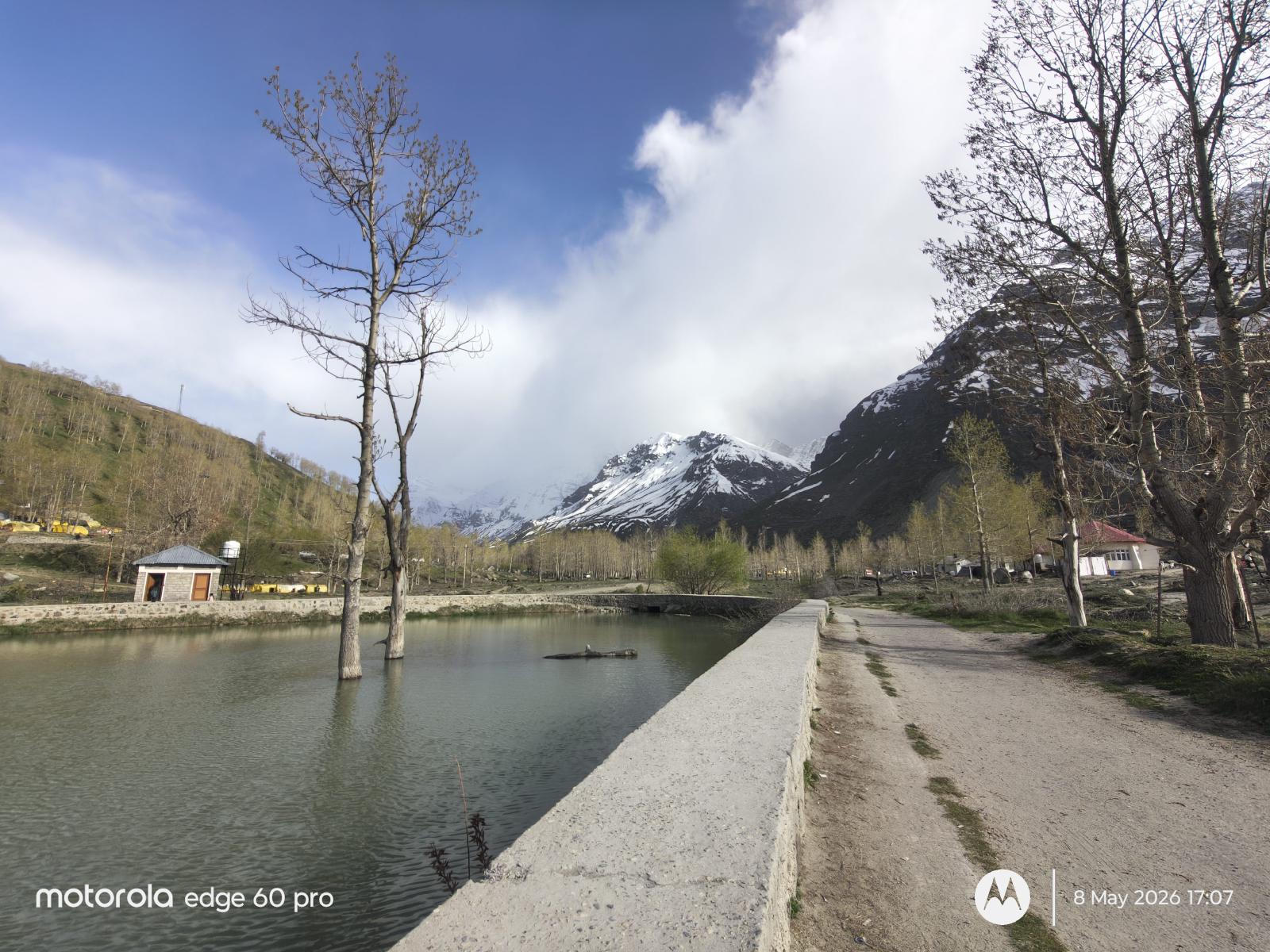
On the return, we stopped at Sissu — just before re-entering the tunnel. A small settlement, a lake, and bare trees standing in still water with snow peaks reflected behind them. After the barrenness of Gramphu, the greenery returning around Sissu felt like a slow exhale. We didn’t stay long. The light was going, and the tunnel was waiting.
Back through the tunnel. Drizzle on the Manali side. And then the familiar descent into the valley, the green coming back, the temperature rising a few degrees. Dinner on Mall Road: Sa-Ba fresh dough pizza. Exactly the right thing after a cold day on the road.
That evening, the conversation turned — again — to more days. There is a road at Gramphu that goes to Kaza and Spiti. There is another that goes all the way, through Keylong and Jispa, past Baralacha La and Shinkula, toward Leh. There are villages in the Kullu valley — Sethan, Dobhi — that we passed near but never reached. There is a Naggar that deserves more than a single afternoon. There are Jispa tents along the river that looked, from the road, like the kind of place you’d want to wake up in.
Manali is not a destination so much as a crossroads that happens to be beautiful in its own right. You can spend a week here and still be at the beginning of the routes that start from it.
We had touched some of those routes. The next day would take us through the Atal Tunnel again — this time all the way to Shinkula Pass at 16,580 feet, on the government tour we’d booked on a whim from a stall on Mall Road.
More from Days 4 and 5 — Shinkula, Anjani Mahadev, paragliding at Solang — coming next.